On Social Media
· — views
Is social media a net positive for society? Can it be implemented in such a way as to become net positive?
Originally, social media networks operated on the following schema:
- I post content.
- My friends view and react to that content.

Therefore, two barriers to use could be reduced. First, barrier to consumption. Several technologies attempted to tackle this problem, most notably, recommendation systems.
In the early days of social media, viewing your friends’ content required navigating to their page. There was no content delivery. Recommendation systems solved this problem by algorithmically predicting the content you would be interested in.
Initially, this meant applying a series of static filters, like recent updates from your friends, and displaying those on a single page called your feed. Over time, recommendation systems have evolved into dynamic machine-learning algorithms that translate your on-screen taps, swipes, and pauses into content recommendations. Modern RecSys are ambling behemoths of user data that are extremely successful at retaining user attention.
It should be no surprise that keeping users stimulated is not the same as helping users feel fulfilled. Before social media, people often criticized TV soap operas for the same, yet modern social media particularly lacks this sense of lasting fulfilment.
For one, short-form content like TikTok reels are optimized to snag human attention but don’t leave a lasting impression: (1) users often watch dozens of reels in rapid succession; (2) engagement is a flawed metric for satisfaction; (3) engagement as a metric incentivizes creators to pretend the ultra-curated content they produce is wholly authentic.
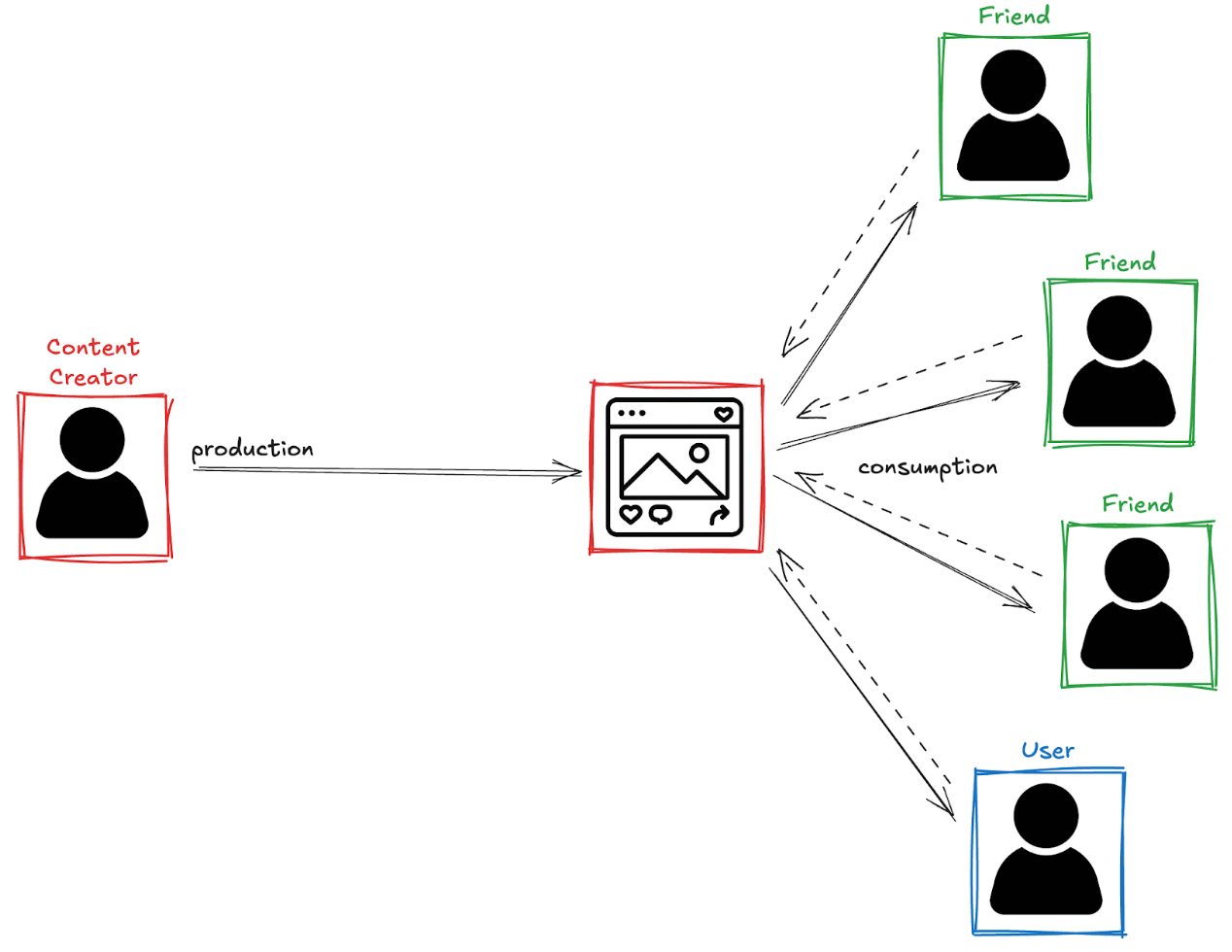
Reducing the barrier to consumption is not fundamentally wrong. What’s wrong is changing the type of content people are served - to increase consumption overall.
Modern influencers are like actors or singers in traditional media. They entertain millions, and deserve to be compensated well. However, we should distinguish social media as an entertainment platform and social media as means of interpersonal communication.
The same platform can serve both needs, but we should acknowledge the competing incentives.